Creating Deep Mastery from Repetition: Expertise

Repetition Creates Expertise

In this series we are looking at how repetition can create deeper and deeper layers of mastery. Last time, we looked at discipline. This time we go one level deeper, to expertise.

LEVEL 2 – REPETITION CREATES EXPERTISE

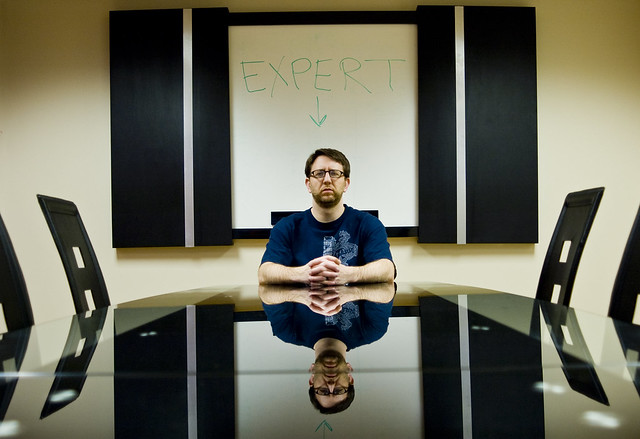
While level 1 of DEEP mastery – discipline – is about going beyond expectations by practicing, level 2 is about becoming an expert in your specialty.

When we repeat, we build skills. We learn techniques, then refine and sculpt them through repetition. This is the level where the raw talent become reliable. At this level, our repetitions throw roadblocks at us – fundamental errors, odd mistakes, anomalies – and we learn what the fixes are.

Know how to manage a small team? At his level we discover how leadership is different with larger team sizes.

Know how to give a speech at an intimate gathering? At this level, we learn how speaking differs for big audiences or noisy venues or when we incorporate visual aids.

In my sport, it might be about learning a new catch, then discovering how different the skill feels in high winds or a confined space or when I need to make the catch off a pass from a teammate.

Imagine this level as college. We choose a major, then look at that topic repeatedly from different angles. We expand our knowledge, and along the way we conquer misunderstandings, get smacked down a bit by professors when we trip up, and learn the established connections between concepts.

This is the level where we use failure to make our skills rock solid. It’s where we learn the limitations off our skills, then expand and adapt them. At this level, we learn to apply our skills confidently in a wide variety of conditions. We become experts.

Where might you take your expertise further? Have you put in the reps to become competent but not yet an expert? How might it change your career if you expanded your expertise? How might it impact your life outside work to take something you’re familiar with and develop mastery?

Why Extraordinary Goals Matter

American swimmer Katie Ledecky is rewriting the record books of women’s distance swimming. This week, she set two world records at the Pan Pacific Swimming Championships. The Olympic gold medalist is not just winning races, she is making people rethink what is possible. This summer, she has set five world records. In the last year, taken 16 seconds off the world record in the 1500m freestyle.

Extraordinary Goals Redefine What’s Possible

Ledecky is a phenomenon, a spectacular talent, and we can learn about goal setting by watching her performances. Her world records are check-ins on her training. She’s building toward these mindboggling times. They are intentional. Unlike most athletes, she is not aiming at incremental improvement. At some point, she and her coach realized how much upside was available and set extraordinary, revolutionary goals.

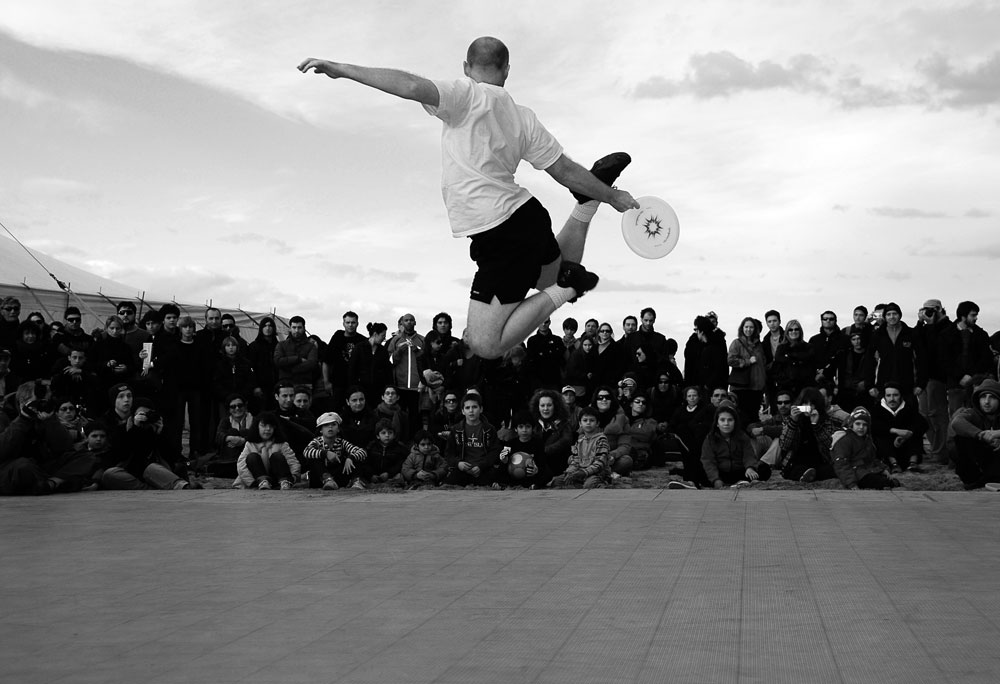
In my sport, I’m known for doing tumbling moves. I’ll spin the disc on my finger, pop it up, spin around, do a somersault and get the disc spinning back on my finger. I learned that move – and the double spinning tumble – from watching another top player, Dave Murphy. Once I got used to that move, I imagined an entire family of moves beyond my existing skill level. How about a triple spinning tumble? What if I did more difficult tricks after the somersault, like a very technical trick called The Juice. What about doing the tumbles directly from restricted moves like a behind the back set or a pass we call the Yogi? What about a quadruple spinning tumble?

Thinking of these moves created extraordinary goals. Once I imagined them, they became possible. From that moment on, freestyle was not just about getting better at the expected. It was about claiming new territory. I began to figure out the training and skills needed to make these ideas real. The training plan emerged from the idea, and the training plan was more ambitious than before. All those ideas became real moves, and I trained many of them well enough to try in competition. Here’s a triple spinning tumble from a beach session a few years ago:

The Goal Creates The Plan

Back to Katie Ledecky. She’s training toward the 2013 season. The six-year old world record is 15:42.54 by Kate Ziegler. She realizes not only that she can break it but that she can reset the standard. She doesn’t train for 15:42.53. That’s not worthy of her vision. She trains to destroy the record and does just that. She takes 9 seconds off Ziegler’s time.

Cool. Now what? The best time to consolidate your greatness is after a big victory, when most people would be resting on their laurels. She reimagines reality. The new record is 15:36.53. She sets her sights way beyond that for 2014 and gets to work. People are amazed when she takes another two seconds off the world record at meet in June, but it’s just a glimpse of what she’s been training toward. Two months later, we see the next payoff of her training at the Pan Pacific Championships with this new world record: 15:28.36. No man had swum that fast until 1975. It would have placed 18th in the men’s 1500m race at this year’s US Championships. Extraordinary goal for 2014 completed!

I don’t know whether Ledecky is scheduled to swim any more races this year, but I can’t wait to see how she redefines her own potential. Whether or not she hits her goal, the goal will be huge and confident and courageous.

Applying Extraordinary Goals Outside Sports

As sports fans we cheer for achievements like Ledecky’s. What we don’t do often enough is apply sports lessons to our everyday lives. But if we look to community and business leaders, we can see extraordinary goals in action.

Elon Musk imagined a world where electric vehicles are the standard, and we’re seeing him pursue that vision. The success of Tesla vehicles was only one chapter of his plan. We’re beginning to see that they are part of a complete reimagining of transportation infrastructure.

The fight for marriage equality shows us how extraordinary goals become reality in society. For most people, same sex marriage was an alien concept until very recently. But for the leaders of the marriage equality movement, it was an idea. A seemingly impossible idea, but one that they as leaders could not betray. By imagining marriage equality, however improbable, they set the wheels in motion. And here’s the important part: it didn’t succeed at first. Just having an extraordinary idea does not guarantee its success. I can imagine swimming faster than Katie Ledecky, but all it guarantees is that my personal likelihood of achieving that goal just increased by some unmeasurable amount. It became possible, not guaranteed or even probable until I create the right plan and execute on it. Progress toward marriage equality included setbacks, and the action plan toward this extraordinary goal evolves with each piece of new data.

Think about your skills, your projects, your aspirations. What are you aiming for now, and what ridiculously bigger result could you imagine. What new territory are you willing to claim? Now, what would it take to get there? Remember, you already made a good portion of the journey just by imagining a bigger goal. How would it feel to experience that huge result? How would it change things to embrace the ridiculous and go after it?

Creating Deep Mastery from Repetition: Discipline

Repetition Creates Discipline

There’s a leap from having raw talent to doing something about it. That’s where repetition (aka practice) comes in. Raw talent will lead to incredible peak moments, but the practiced expert is going to win out in the long run. Natural brilliance is no match for strong skills developed deep and wide. It’s why the wily veterans are able to overcome the cocky upstarts so often.

When we look at practice in terms of training vs working out, we look at our experience of the activity in the moment and how it connects to what matters to us. Another way of thinking about it is repetition. Through a lens of repetition, we can see all the strikingly different ways we can be in the moment.

Repetition is a core component of practice. If we are doing something about our raw talent by practicing, we might assume there’s a simple relationship. Put in the reps. Get better. Turns out there’s more than one way reps help you get better. Some give you moderate payoffs. Others transform you and expand what was thought to be possible.

I see a four level model of the payoffs from repetition. I call it DEEP Mastery. In this series, we will explore how each level transforms repetition into different flavors of mastery. Level 1 is Discipline.

LEVEL 1 – REPETITION CREATES DISCIPLINE

Level 1 is counterintuitive, a bit of a paradox. We need discipline to do our repetitions. We can’t even start shaping our raw talent without it. It makes us show up and be focused toward completing the mission.

That’s not the discipline of Level 1. We need to flip it around to see discipline really driving us toward mastery.

Mastery emerges when we use repetition to build discipline.

When we repeat, we get bored. In that moment of boredom, one of our choices is to bail. I do that often with running. Only a few minutes into a run, I can’t wait for it to be over. That’s why I am not moving toward being a masterful runner.

Another choice is to keep practicing. If we make this choice, we expand our commitment to the goal. We build our capacity for discipline. We skew our reaction to boredom from quitting toward continuing, we can apply that discipline throughout our life.

There are no traffic jams along the extra mile. – Roger Staubach (or Paula Abdul, depending on who you believe)

Your breaking point is where you set yourself apart. At the moment you’re bored or exhausted or out of ideas, being willing to go one more step gives you the edge.

I was confident at this year’s world championships. One important reason was that my team had put in reps. We had often chose to go more rounds of practice than we wanted, sometimes in laughably poor conditions. We knew what our performances felt like when we were physically and mentally exhausted. Great training for a mentally demanding world championship held in the thin, mountain air of Medellin, Colombia! It paid off. My team won, and I was rewarded with my 16th world championship title.

You know what repetitions look like when you’re fresh. Looking at it from the point of exhaustion is a different level of discipline.

Next time you have a choice to continue or bail, make a conscious choice. Another repetition may just create the discipline that takes you to your next victory.

What Mountain Will You Climb At 61 Years Old?

This is a stunning video about passion, longevity, vitality and family.

Rock climber Francisco Marin is 61 years old. He found his passion, devoted himself to it, and wove the rest of his life around it. As he shows us photos from throughout his life, we see the richness, the many chapters, the varied interests, the other passions he has devoted himself to, the pride in his family. We see how he has simplified his life. In one small living space, he has everything he needs – at least during his current quest to climb Geminis.

EpicTV’s description of the video pitches it as a more difficult rock face than anyone his age has climbed, but it’s clear that the record isn’t what really matters to Marin. Devoting himself to this climb for two years has offered him something more. If I had to guess, it would be about stretching his limits, using his creativity to solve this climbing challenge, and sharing the experience with those he loves. Something we can all aspire to.

Why Michael Phelps Shouldn’t Retire – And Neither Will I

Michael Phelps swam the 4th fastest 100m butterly time in the world tonight, and the media headlines are about losing.

This is how we know the media has no clue about elite performance.

Phelps, the greatest swimmer ever, finished second to Ryan Lochte, who may end up as the second best swimmer ever. He did it after taking two years off, gaining 30 pounds, then quietly training back into shape over the last six months.

Today’s placement wasn’t about winning or losing. It was a kickoff. An experiment. The smile he showed in the prelims showed it has elements of a game. It’s fun.

While I’m sure Phelps would have been pumped to win, his results show he still belongs among the world’s elite swimmers. That he could be so competitive after such a short time training should terrify his rivals.
Continue reading “Why Michael Phelps Shouldn’t Retire – And Neither Will I”